
- Over 1 million successful rentals
- Popular countries
- Popular regions
- Popular cities
- Popular airports
- Car Hire United Kingdom
- Car Hire Spain
- Car Hire Italy
- Car Hire France
- Car Hire United States
- Car Hire Portugal
- Car Hire Greece
- Car Hire Ireland
- Car Hire Cyprus
- Car Hire Switzerland
- Car Hire Germany
- Car Hire Croatia
- Car Hire Turkey
- Car Hire Canada
- Car Hire South Africa
- Car Hire Austria
- Car Hire Poland
- Car Hire Australia
- Car Hire Netherlands
- Car Hire Denmark
- Car Hire England
- Car Hire Scotland
- Car Hire Majorca
- Car Hire Florida
- Car Hire California
- Car Hire Crete
- Car Hire Sicily
- Car Hire Sardinia
- Car Hire Menorca
- Car Hire Wales
- Car Hire Kefalonia
- Car Hire Tenerife
- Car Hire Channel Islands
- Car Hire Corsica
- Car Hire Madeira
- Car Hire Gran Canaria
- Car Hire Fuerteventura
- Car Hire Isle of Man
- Car Hire Santorini
- Car Hire Azores
- Car Hire London
- Car Hire Faro
- Car Hire Malaga
- Car Hire Manchester
- Car Hire Alicante
- Car Hire Palma de Mallorca
- Car Hire Edinburgh
- Car Hire Dublin
- Car Hire Geneva
- Car Hire Nice
- Car Hire Paphos
- Car Hire Pisa
- Car Hire Birmingham
- Car Hire Lisbon
- Car Hire Milan
- Car Hire Glasgow
- Car Hire Larnaca
- Car Hire Orlando
- Car Hire Bristol
- Car Hire Rome
- Car Hire London Heathrow Airport
- Car Hire Faro Airport
- Car Hire London Gatwick Airport
- Car Hire Malaga Airport
- Car Hire Alicante Airport
- Car Hire Manchester Airport
- Car Hire Mallorca Airport
- Car Hire Dublin Airport
- Car Hire Edinburgh Airport
- Car Hire Nice Airport
- Car Hire London Stansted Airport
- Car Hire Paphos Airport
- Car Hire Pisa Airport
- Car Hire Lisbon Airport
- Car Hire Birmingham Airport
- Car Hire Larnaca Airport
- Car Hire London Luton Airport
- Car Hire Geneva Airport (Switzerland)
- Car Hire Orlando International Airport
- Car Hire Glasgow Airport
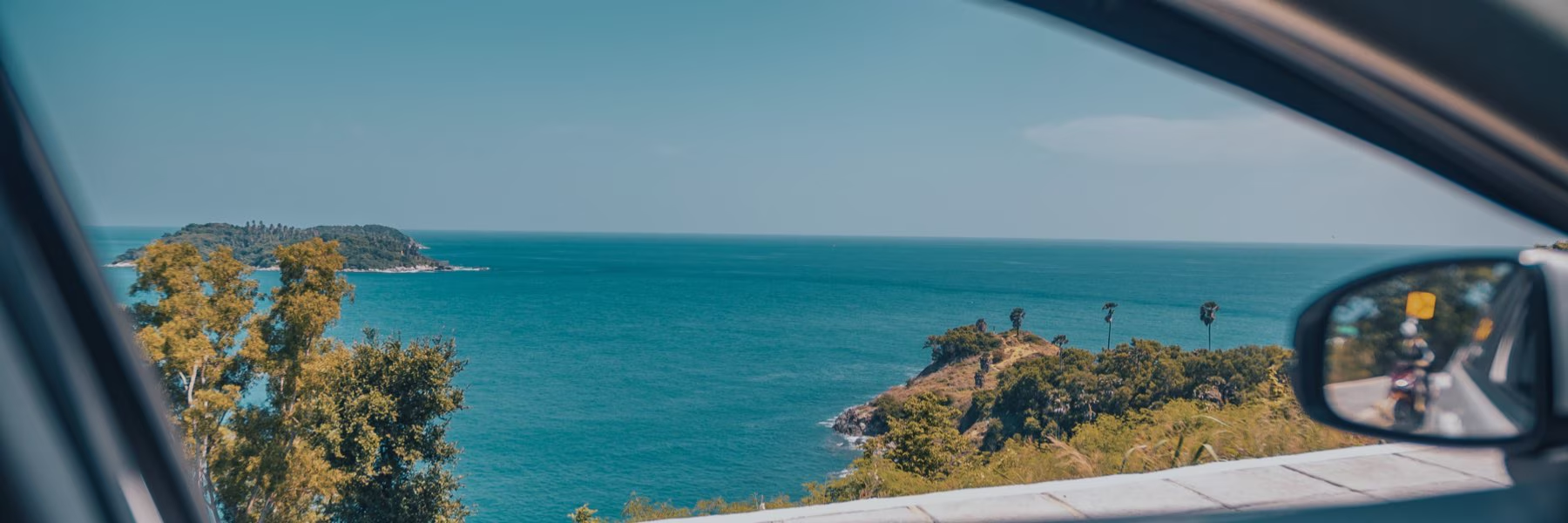
Car Hire Cape Breton Island
Save time and money. We compare the offers of car rental companies in Cape Breton Island on your behalf.
- Free cancellation Up to 48 hours prior to the scheduled pick-up time
- Best price guarantee Have you found a better price? Let us know and we will make you a better offer.
- 24000+ pick-up locations Locations around the world

Compare Car Hire
Carrentals.co.uk offers simple and straightforward car hire comparison services. We don't add a penny to your quotes!

Cape Breton Island Guide
Most popular car hire locations in Cape Breton Island
Guide
Cape Breton Island lies off the coast of Nova Scotia. Wonderfully scenic, this island is comprised of verdant forestland, pristine lakes, hills, valleys, mountains and a rocky shoreline. With so much to see, it’s not surprising that Cape Breton Island attracts many visitors looking for outdoor adventure, along with those looking for old cultural traditions.
37kms southeast of Sydney (the largest town on the island) is the Fortress of Louisbourg, a National Historical park. The fort’s stone walls enclose more than four dozen restored buildings, remnants of a once-busy fortress town set beneath a soaring church spire. The town dates back to the mid-18th century and makes for an intriguing visit.
Cape Breton Highlands National Park stretches all the way from the east to the west of the island. This gigantic park offers fabulous views of the coast, wooded valleys and mountains. Cabot Trail is a 300-km loop encompassing the area of the park; the drive around this trail is spectacular and should not be missed.
Some of the lakes on Cape Breton Island are so clean you wouldn’t mind drinking the water (although it’s not advisable). The Bras d'Or Lakes is a salt water lake system that runs through the island from East Bay to West Bay.
Scottish highlanders settled on Cape Breton in the late 18th century and brought with them a strong sense of cultural tradition. Today, the island is still imbued with these traditions, and local art and music reflects them. The Celtic Colours music festival, held in early October, features great local Celtic performances which are held all across Cape Breton Island.
To get to Cape Breton Island involves a 300-km drive from Halifax, before crossing the Canso Causeway. The quickest way to the island is Route 102 to Truro and Route 104 to the causeway. The main highway on the island is Route 105 (the Trans-Canada). VIA Rail operates a service to Atlantic Canada with stops in Halifax and Truro, Nova Scotia, en route to Montréal, Québec. Halifax International Airport is the Atlantic Canadian destination for all flights.
Practical information
-
CurrencyCanadian dollar
-
Driving directionRight
-
City speed limit50 km/h
-
Freeway speed limit50 - 100 km/h
-
LanguageEnglish, French
What most people want to know
The following questions and answers are a selection of the most popular questions. If you do not find the answer to your question, have a look at the Frequently Asked Questions page or contact us.